
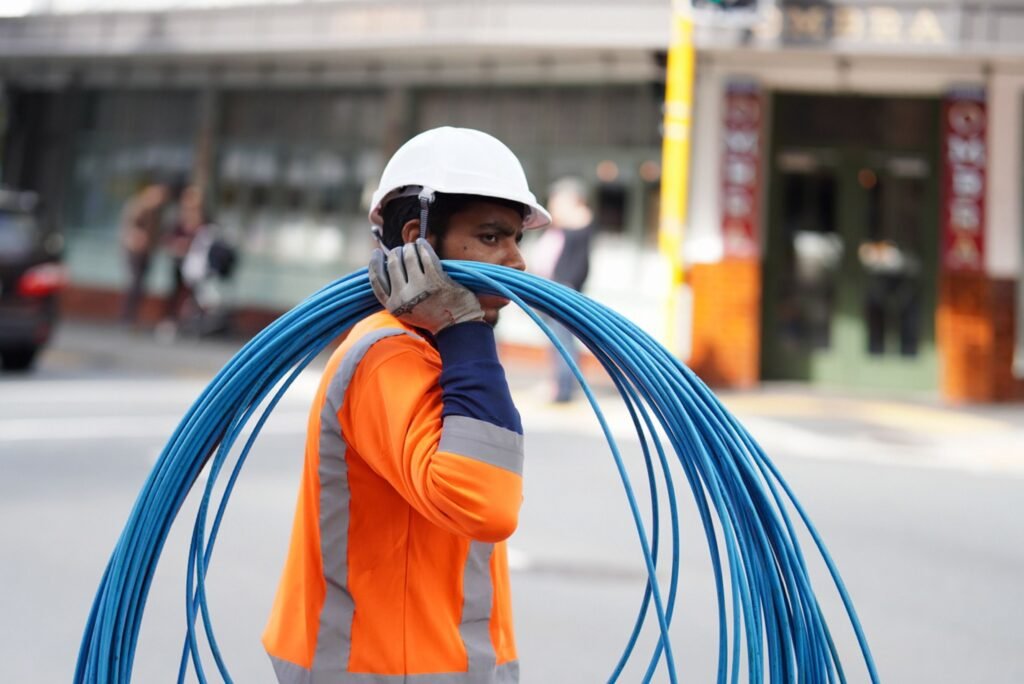
Streets getting dug up, orange cable ducting popping up on pavements everywhere, engineers in hi-vis working their way through neighborhoods house by house, it’s become a pretty familiar sight across the UK these past few years. The full fibre rollout happening right now is one of the biggest infrastructure shifts the country’s telecoms network has seen in decades, and understanding why it’s happening explains why one street might get fibre this year while the one next door waits a few more. Youfibre is one of several providers pushing this expansion forward, and honestly there’s a lot more behind it than just faster Netflix streams.

The Old Copper Network Was Never Built for This
Britain’s phone network got designed decades back for voice calls, not the kind of data demands modern households actually throw at it now. Copper cabling, the stuff carrying broadband for years through ADSL and even hybrid fibre setups, just wasn’t built with today’s usage in mind, multiple devices streaming at once, video calls, cloud backups, online gaming, all happening simultaneously in a lot of homes now.
That old infrastructure’s been patched and upgraded over and over through the years, but there’s only so much speed and reliability copper can physically squeeze out before hitting a hard ceiling. The UK fibre rollout exists largely because that ceiling got hit a while back, and trying to coax more performance out of aging copper stopped being any kind of realistic long-term fix.
Government Targets Pushed the Timeline Forward
Government targets around nationwide gigabit-capable broadband have played a big part in speeding this whole thing up. Instead of leaving full fibre expansion entirely to market forces and letting providers move at whatever pace suited them financially, policy pressure created a real push to get FTTP rollout moving faster across urban and rural areas alike.
That mattered a lot for areas private companies might otherwise have pushed to the back of the queue, smaller towns and rural communities that just don’t offer the same return on investment as a packed city center. Without that pressure, fibre broadband availability probably would’ve stayed stuck in major urban centers for a lot longer than it has.
Why Providers Are Racing to Build Faster
Beyond government targets, there’s a genuine commercial race going on between providers trying to claim territory before someone else gets there first. Youfibre and other alt-net providers have expanded quickly because being first on a street or in a town often means locking in customers before a rival network even shows up.
That competitive pressure’s actually sped things up quite a bit compared to how slowly infrastructure rollouts have historically crawled along in the UK. Multiple companies racing into overlapping areas means faster overall coverage growth, even if it occasionally leads to the slightly odd sight of two separate fibre networks being laid down the same street within a year of each other.
What Full Fibre Actually Fixes for Households
For actual households, the real benefits driving all this come down to reliability and speed that copper simply can’t touch. Full fibre connections don’t degrade over distance the way copper does, so a house at the end of a long street gets roughly the same performance as one sitting right next to the local cabinet, something that was never true under the old system.
Upload speeds jump dramatically too, and that matters a ton for anyone working from home, on video calls constantly, or backing up big files to the cloud regularly. This is honestly one of the biggest differences people notice after switching, copper connections were always weaker on upload than download, and full fibre pretty much closes that gap.
How the Rollout Is Actually Going
Coverage’s expanded a lot over the past several years, though progress still varies quite a bit by region. Urban areas and bigger towns have generally seen faster rollout, simply because cost per household tends to be lower when properties sit closer together, while rural and more remote spots have taken longer to reach, despite policy efforts specifically aimed at those underserved locations.
Youfibre has focused a lot of its own expansion on areas that might otherwise wait years for coverage from bigger, slower-moving providers, which has helped fill in some gaps left by the broader national rollout timeline. Checking postcode-specific availability remains the only real way to know where a given area currently sits in that rollout, since national progress numbers don’t always reflect what’s actually happening street by street.
What This Means Going Forward
The full fibre rollout isn’t done yet, and coverage will keep growing for a while before the UK gets anywhere close to universal FTTP availability. What’s already changed is pretty significant though, millions of households now have access to connections that simply weren’t possible on the old copper network, and that shift keeps picking up speed as more providers, Youfibre included, keep pushing into areas that got overlooked or pushed down the priority list by the bigger legacy networks.
Understanding why this rollout matters, government targets, competitive pressure, and copper’s genuine technical limits, makes it a lot easier to see why so many streets are torn up right now, and why that disruption is generally heading somewhere worthwhile for anyone sick of unreliable broadband.
